


The 5-speed manual transmission Ford IB5 fitted to the 1st generation Ford Ka (1997 to 2007) — both in the phase with the Endura-E (1.0 and 1.3) and in the Zetec Rocam (1.0 and 1.6) phase — is renowned for its durability and positive shift engagement, but suffers severe wear when gear lubricant degrades due to oxidation, moisture ingress, or metallic particle contamination. Typical symptoms of degraded oil include difficulty or crunching when shifting into 2nd gear once hot (especially on downshifts over speed bumps or turning corners) and a stiff, heavy gear lever feel.
Although some dealerships advertise gearbox oil as "lifetime", real workshop practice proves that proactive fluid renewal every 50.000 to 80.000 km or every 5 years restores smoothness to the brass synchronizer rings and prevents premature gear pitting. In this procedure, Paulo demonstrates the complete home DIY gearbox service in the garage workshop, applying the gravity refilling method with clear tubing and teaching the cardinal rule of mechanic work prior to any drainage.
Workshop Golden Rule (Never Skip This Step!)
- Always loosen the upper filler and level check plug BEFORE unscrewing the lower drain plug. If you drain all transmission oil and subsequently find that the upper filler plug is seized, stripped, or unreachable, the vehicle is stranded and immobilized without lubrication.
- Always use a clean oil drain pan with a minimum capacity of 4 liters to comfortably catch all drained oil without risk of spillage or overflow.
- Park the vehicle on strictly level ground (or support on 4 level jack stands) so the overflow level check is 100% accurate.
Wrench and Tool Requirements Table
Scroll horizontally to see all table columns.
| Tool / Equipment | Size / Specification | Role in Procedure |
|---|---|---|
| Allen Key / Hex Bit Socket | 8 mm | Removal and torque tightening of side upper filler/level inspection plug |
| Box-End Wrench / Hexagonal Socket | 19 mm | Removal and torque tightening of bottom drain plug on differential casing |
| Open-End Wrench / Ratchet | 10 mm | Disconnecting battery terminals to gain clear overhead line-of-sight and routing access |
| Transparent PVC Tubing | ~1 meter (Ø 1/2" or 12 mm OD) | Gravity feed path running from top of engine bay down into gearbox fill port |
| Small/Medium Funnel | Clean plastic | Fitted to top end of hose for smooth continuous pouring of fresh oil |
| Oil Drain Basin | Minimum 4 liters | Clean container for catching fluid and visual inspection for metal shavings |
| Wire Brush and Shop Towels | Manual | Thorough cleaning of threaded plug surfaces before reinstalling |
Fluids and Technical Specifications
Scroll horizontally to see all table columns.
| Item / Component | Technical Specification | Recommended Capacity | Workshop Notes |
|---|---|---|---|
| Manual Transmission Gear Oil (Ford Spec) | SAE 75W-90 API GL-4 (synthetic or semi-synthetic) | 2,8 Liters (purchase 3 bottles of 1 liter) | Warning: Avoid strictly GL-5 oils lacking yellow metal protection, as aggressive sulfur-phosphorus extreme pressure additives chemically attack brass and bronze synchronizer rings in the IB5 gearbox. |
| Acceptable Alternative Lubricant | SAE 80W API GL-4 | 2,8 Liters | Economical alternative for mild urban driving offering smooth shifts in temperate weather. |
| Brake Cleaner / Solvent Degreaser | Aerosol can | 1 can | Degreasing transmission casing exterior around plugs after completing fill. |
Torque Specifications Table for Ford IB5 Transmission
Scroll horizontally to see all table columns.
| Bolt / Threaded Plug | Tool Used | Recommended Torque | Practical Guidance |
|---|---|---|---|
| Lower Drain Plug | 19 mm | 35 to 45 N·m (3,5 to 4,5 kgf·m) | Tapered thread sealing into aluminum casing. Tighten firmly with box wrench without excessive lever cheater pipe to prevent housing fractures. |
| Upper Level / Filler Plug | 8 mm Allen | 35 to 45 N·m (3,5 to 4,5 kgf·m) | Clean female hex recess completely so the Allen key seats to full depth before applying torque. |
| Battery Terminal Clamp Bolts | 10 mm | 5 N·m (0,5 kgf·m) | Snug and secure clamp to prevent movement on soft lead battery posts. |
Phase 1: Setup, Workspace Clearance, and Plug Access
The Ka's IB5 transaxle is positioned transversely on the driver's side. The plugs are located on the outboard face facing the wheel arch and beneath the differential casing.
Symptom Diagnosis and Lubricant Specification
In the video, Paulo explains that the Ka shifted gears smoothly when cold, but began grinding or demanding double-clutching into 2nd gear once fully warm. Official Ford specification for the IB5 gearbox is 75W-90 GL-4 (2,8 liters dry fill capacity). Fresh high-spec oil was chosen to re-establish the hydrodynamic oil wedge.
▶ at 00:02 in the video ↗
Disconnecting Battery and Clearing Engine Bay Access
Using a 10 mmwrench, disconnect the negative terminal first followed by the positive terminal. Remove battery and tray to open top-down view and overhead lighting into the engine bay. This gives direct sightline to the upper transaxle housing and makes routing the gravity hose straightforward.
▶ at 01:34 in the video ↗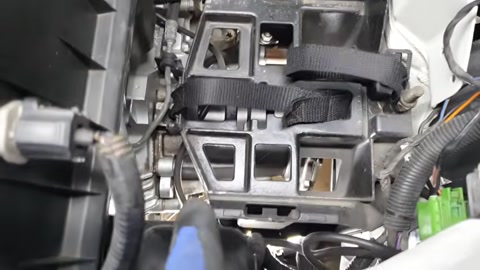
Loosening Upper Filler / Level Plug (8 mm Allen Wrench)
Applying the cardinal safety rule, seat the 8 mm Allen key fully into the side fill plug. Ensure the hex bit bottoms out completely to prevent rounding the aluminum hex recess. Turn counter-clockwise and completely extract the plug, confirming the fill port is 100% open and unhindered.
▶ at 02:00 in the video ↗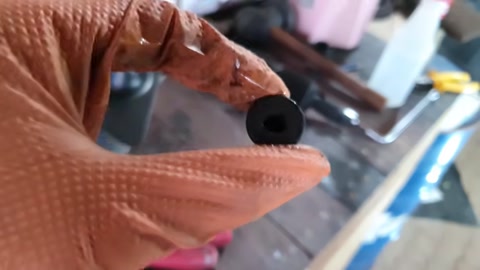
Pre-Check of Oil Level Using Bent Key as Dipstick
Before opening the drain plug, Paulo uses the short tip of the Allen key like an improvised dipstick inside the fill opening. The tip emerges wet with oil up to the bottom edge of the threads, confirming the gearbox was running with correct volume, ruling out major leaks, and confirming shift reluctance was due to thermal oil breakdown.
▶ at 02:20 in the video ↗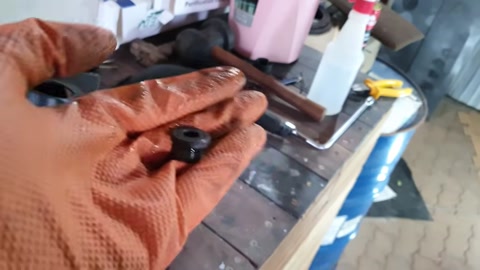
Phase 2: Draining Used Lubricant and Inspection
Loosening Bottom Drain Plug (19 mm Wrench)
Slide the clean catch basin directly under the lowest point of the differential casing. Using a hexagonal socket or box wrench 19 mm, crack the drain plug loose. Unthread the last threads by hand while pushing gently inward, then pull away swiftly to allow smooth laminar oil discharge.
▶ at 03:05 in the video ↗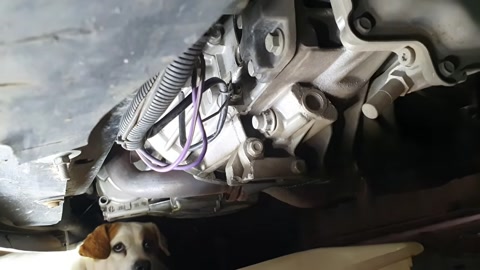
Complete Drain and Visual Check for Metallic Shavings
Allow 10 to 15 minutes for the oil to drain down to a thin drip. Inspect the bottom of the catch pan: the old fluid was heavily darkened and had lost viscosity, but contained no gear tooth fragments or excessive golden synchronizer dust, confirming solid internal mechanical health.
▶ at 04:44 in the video ↗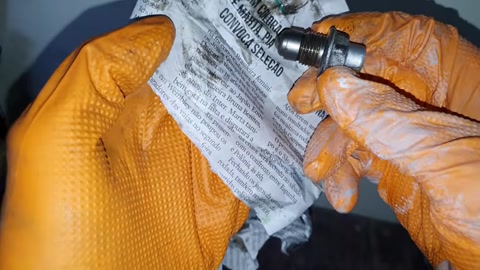
Cleaning and Reinstalling Drain Plug with Correct Torque
Thoroughly clean threads of the 19 mm plug using a wire brush and clean rag to clear dirt or old debris. Thread the plug back in by hand until flush. Tighten to a torque of 35 to 45 N·m with a box wrench or torque wrench, feeling the seating of the taper without over-torquing.
▶ at 05:20 in the video ↗
Phase 3: Gravity Refilling, Level Check, and Testing
Setting Up the Gravity Refill Line
Because the side fill port lacks room to tip gear oil bottles directly, Paulo sets up a classic workshop gravity rig: insert one end of a 1-meter clear hose into the gearbox fill port and route the other end up into the engine bay, connecting a clean funnel near the battery tray.
▶ at 06:17 in the video ↗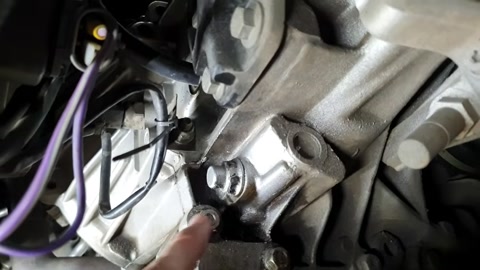
Steady Refilling Until Overflow Point
Pour fresh gear oil slowly into the funnel. Given oil viscosity, fluid flows steadily through the tubing. Correct fill level on the IB5 transaxle is reached when oil begins weeping out of the bottom lip of the fill port (approximately 2,8 liters on a completely drained gearbox). Stop pouring as soon as excess begins dripping into the basin.
▶ at 07:15 in the video ↗
Torquing Upper Plug, Reassembly, and Shift Engagement Test
Remove plastic hose and thread in the 8 mmAllen plug. Tighten to 35 to 45 N·m. Clean off any external oil with brake cleaner and shop rags for future leak checks. Reinstall battery connecting positive first then negative. Start vehicle and test stationary gear engagement across all forward gears and reverse.
▶ at 07:55 in the video ↗
Workshop Tips and Critical Mistakes to Avoid
- Do NOT use ATF (automatic transmission / power steering fluid) in the IB5 manual gearbox: While some shops incorrectly recommend ATF to "loosen up" stiff gearboxes, ATF lacks the hydrodynamic film strength and extreme-pressure additives required to safeguard hypoid final drive gears and helical tooth profiles under load.
- Protect the aluminum Allen plug: If the 8 mm female hex recess has trapped dirt, clean it out with a pick and solvent before inserting the tool. An ill-seated Allen key will round off the internal hex, turning a simple task into an extraction nightmare.
- Vehicle level matters: If the front of the car is elevated on ramps or jack stands while the rear sits low, the overflow fill point will read falsely low. Keep all four corners level when checking final fluid level.
Frequently Asked Questions (FAQ)
Does Ford Ka manual gearbox oil need changing or is it lifetime?
The "lifetime fill" concept was created by car manufacturers based solely on the warranty period (typically 100.000 km or 5 years). In real-world driving, transmission thermal cycles, moisture condensation, and metallic wear break down additives. Proactive replacement every 60.000 to 80.000 km is strongly recommended to protect synchronizers and bearings.
Can I use API GL-5 gear oil in the Ford Ka transmission?
It is not recommended. The GL-5 standard contains high concentrations of sulfur-phosphorus extreme pressure additives that chemically react with and corrode yellow metals (brass and bronze), which form the synchronizer rings in the Ford IB5 gearbox. Always use lubricants certified for API GL-4.
Why does 2nd gear grind more once the engine is warm?
As operating temperature rises in the engine and transmission, degraded old oil suffers severe loss of kinematic viscosity. The thinned fluid cannot produce the necessary friction coefficient for the synchronizer ring to match shaft speeds before collar engagement, resulting in that telltale crunch.